Wing Solar
Wing Solar
Wing Solar
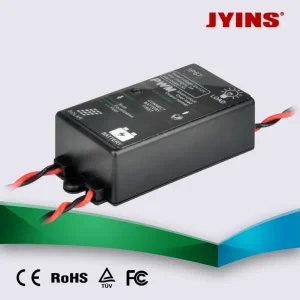
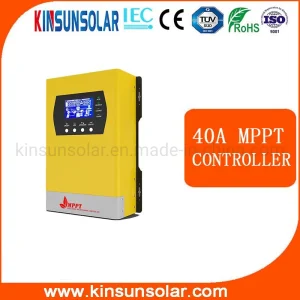
Our premium-grade charge controllers optimize solar yield, manage battery health, and ensure system uptime in residential, commercial, and agricultural applications.
Afghanistan's energy infrastructure faces historic challenges. With a national electrification rate estimated at less than 40%, major metropolitan centers like Kabul, Herat, Mazar-i-Sharif, and Kandahar rely heavily on imported electricity from neighboring Central Asian countries. Rural provinces, home to over 70% of the population, live with little to no access to a centralized electrical grid. In this landscape, off-grid solar photovoltaic (PV) systems are not just alternative energy—they are the foundational baseline for economic survival, agricultural continuity, and basic human welfare.
The geography of Afghanistan, defined by the rugged terrain of the Hindu Kush mountains and the vast, arid deserts of the southwest, makes traditional centralized grid expansion economically and logistically unfeasible. Solar power has emerged as the most scalable solution.
However, the viability of off-grid solar systems depends entirely on energy storage and regulation. Without industrial-grade solar charge controllers, battery banks succumb rapidly to extreme ambient temperature swings and unregulated power surges.
As a dedicated manufacturing and supply partner for the Afghan market, we provide high-performance charge controllers that act as the intelligent brain of these solar configurations, shielding batteries and maximizing energy harvest.
With volatile fuel pricing and transport blockades, operating diesel generators in provinces like Helmand or Kunduz has become prohibitively expensive. Solar-plus-storage powered by robust MPPT controllers delivers ROI within 18 months.
From the winter freezes of Kabul (-15°C) to the blistering summer heat of Kandahar (45°C), our charge regulators employ advanced thermal compensation algorithms to protect battery cells from thermal runaway.
In the solar industry, one size does not fit all. For the unique environmental context of Afghanistan—characterized by high solar irradiance levels, significant seasonal dust (including the "Wind of 120 Days" in the western plains), and severe temperature fluctuations—the choice between Maximum Power Point Tracking (MPPT) and Pulse Width Modulation (PWM) is critical.
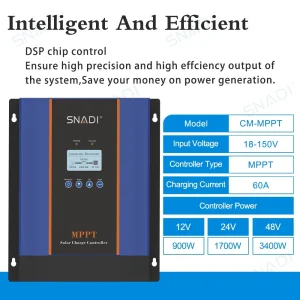
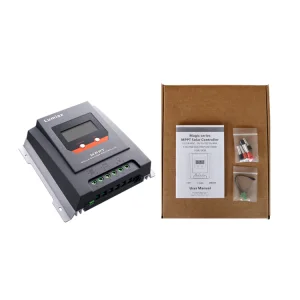
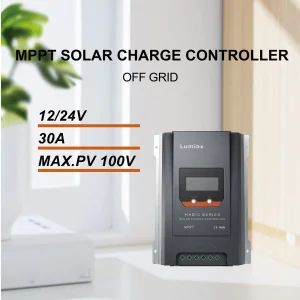
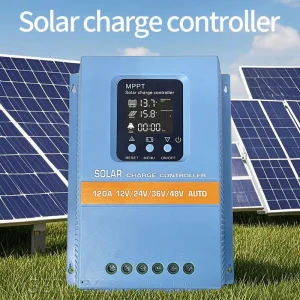
Ideal for high-capacity applications, agricultural water pumping, and remote telecom arrays where maximizing output is critical despite dust coating panels.
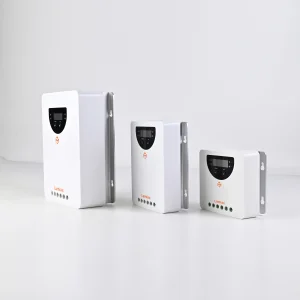
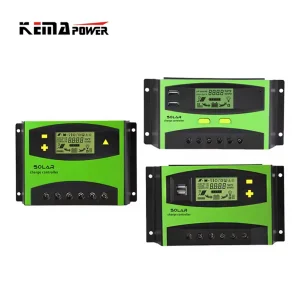
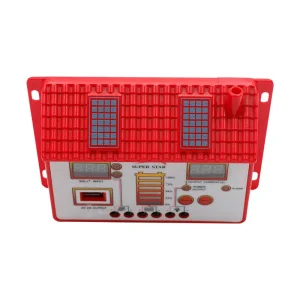
Cost-effective, highly reliable, and simple regulators optimized for smaller residential lighting kits and localized off-grid basic installations.
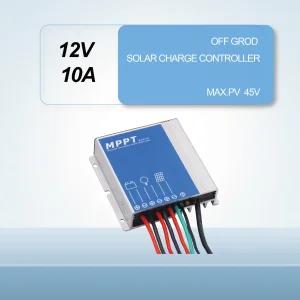
In provinces like Farah, Nimruz, and Kandahar, windborne dust is a constant threat. Standard fan-cooled controllers quickly ingest fine sand, causing component failure or short-circuits. As a leading manufacturer, we address this directly: our specialized IP67 waterproof and dustproof charge controllers utilize fanless passive convection cooling and complete epoxy encapsulation to guarantee multi-decade operation in high-dust agricultural zones.
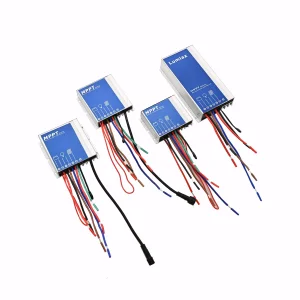
Engineered for unique deployment requirements—ranging from street lighting arrays to hybrid wind-solar off-grid microgrids in mountainous provinces.
Solar technology is transforming lives in Afghanistan across multiple sectors. Our industrial solar controllers are selected for critical projects nationwide, ensuring stability where fuel supply is erratic.
In Helmand and Herat, farms utilize off-grid solar arrays to drive submersible water pumps. Heavy-duty 100A MPPT regulators maximize daily pump uptime, tracking optimal panel voltage despite morning dust hazes.
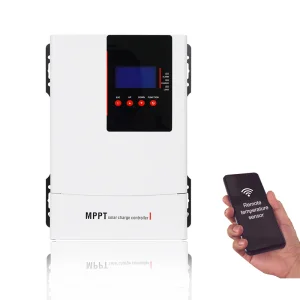
Mobile networks rely on off-grid towers situated on mountain ridges. Using RS485 and Bluetooth telemetry, our controllers allow operators in Kabul to monitor state-of-charge (SoC) and battery temperature remotely.
Refrigerating vaccines requires 24/7 reliability. Our lithium-compatible charge controllers manage LiFePO4 batteries, maximizing conversion speed and extending total cell life cycles in clinics across Badakhshan.
We offer a wide range of high-efficiency solar modules designed to pair seamlessly with our charge controllers for residential, commercial, industrial, and utility-scale projects.
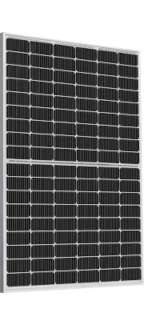
Standard design, ideal for residential roof spaces in Kabul and key cities.
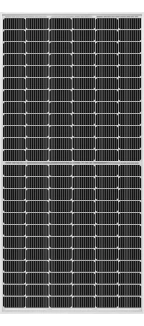
Standard design, engineered for warehouse rooftops and factories in industrial zones.
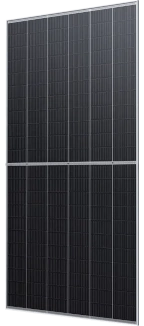
Bifacial design maximizing ground-reflective albedo harvest in desert plains.
Explore our comprehensive lineup of industrial MPPT, heavy-duty PWM, and hybrid wind-solar controller models designed for demanding setups.
As a BloombergNEF recognized Tier 1 manufacturer with nearly two decades of focus on photovoltaic research, development, and engineering, Wing Solar remains a global leader in clean energy access.
Established in 2005, Wing has maintained a consistent trajectory of technical innovation and scale. Operating advanced production lines, our capacity sits at 3GW, with expansion schedules to reach 10GW by 2026.
In 2023, we solidified our operations by opening our international headquarters in Vienna, Austria, providing streamlined logistical, engineering, and service compliance pipelines across European and Middle Eastern corridors.
For bulk buyers and municipal distributors in Afghanistan, our Vienna HQ manages specialized logistical corridors through Karachi and Hairatan, facilitating customs clearances, product certifications (IEC, CE, RoHS), and direct localized support.
The future of off-grid solar is smart, integrated, and highly communicative. Our research department is constantly working to evolve charge regulator topologies, ensuring compatibility with upcoming energy storage trends.
Developing machine-learning trackers that predict dust-induced shading curves on solar panels, allowing the controller to locate true maximum power points up to 30% faster in high-dust regions.
Designing embedded satellite IoT communication into high-power solar charge controllers, ensuring remote off-grid clinics in mountainous regions of Afghanistan can transmit performance data even without cellular network availability.