Wing Solar
Weather plays a significant role in the efficiency of solar performance. Many factors, such as temperature and cloud cover, directly impact how much energy solar panels generate. According to a report by the National Renewable Energy Laboratory, solar panel efficiency can drop by up to 0.5% for every degree Celsius increase in temperature. This statistic indicates that regions with high temperatures might experience reduced solar performance, posing potential challenges for solar energy production.
Moreover, varying weather conditions, such as rain and wind, also influence solar output. Rain can clean solar panels, enhancing efficiency, while too much cloud cover can hinder sunlight penetration. A study revealed that cloudy days can reduce solar output by about 20-30%. These factors highlight the complexity of "how does weather affect solar performance."
Understanding these dynamics is essential for optimizing solar energy systems. It encourages further exploration into better technologies to adapt to weather changes. Adapting to these challenges is crucial for future growth in the solar industry. Industry leaders must consider these factors to ensure reliable solar energy production.
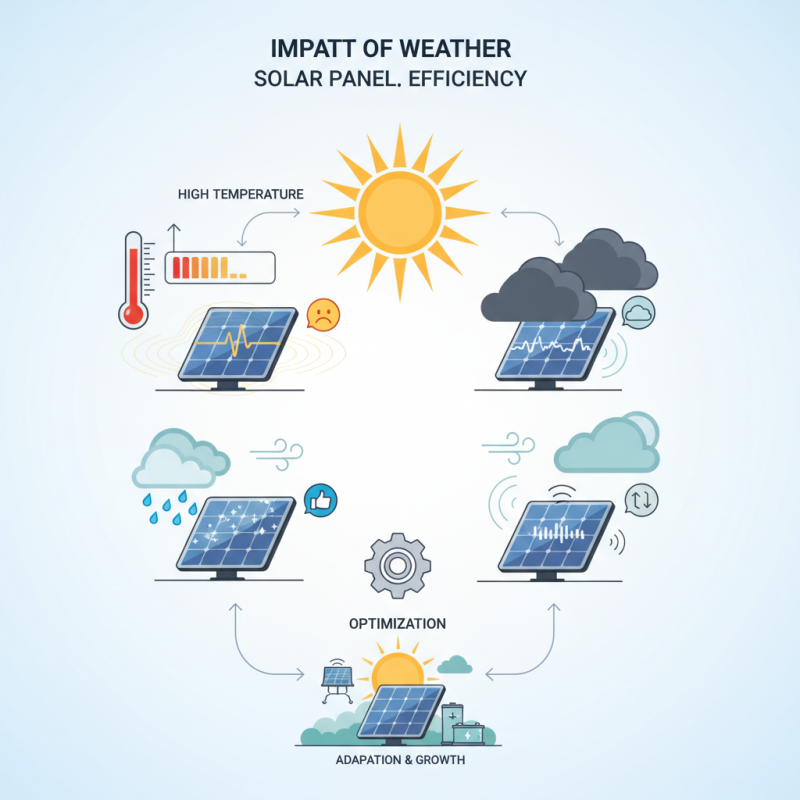
Weather plays a crucial role in solar energy performance and efficiency. Various atmospheric conditions can either enhance or diminish the output of solar panels. For instance, clear skies allow for maximum sunlight exposure. However, clouds and precipitation can reduce this efficiency significantly. Research shows that even a slight overcast can decrease solar output by 15-25%.
Temperature is another critical factor. Solar panels typically perform better in cooler climates. High temperatures can lead to reduced efficiency and increased wear on the panels. A study revealed that for every degree Celsius rise in temperature, efficiency could drop by about 0.5%. This can be counterintuitive; warmer days might seem ideal for solar power but can actually hinder performance.
Moreover, location and weather patterns vary widely. Regions with frequent storms may not produce consistent solar energy. Dust and debris accumulation on panels can also obstruct light, further reducing performance. Regular maintenance is essential. Awareness of local weather patterns can optimize solar energy strategies, yet many overlook this aspect. Adjustments based on seasonal changes can lead to more reliable energy production. Understanding the interplay between weather and solar efficiency is vital for maximizing energy generation in diverse environments.
Weather significantly influences solar panel performance. Key factors include temperature, sunlight intensity, and cloud cover. A study by the National Renewable Energy Laboratory (NREL) highlights that solar panel efficiency can drop by 0.5% for every degree Celsius increase above 25°C. Thus, extremely high temperatures can hinder energy production.
Sunlight intensity is crucial. Clear days allow panels to operate at peak capacity. Conversely, overcast conditions can lead to a 25% reduction in output. Research indicates that, on average, regions with higher annual sunlight hours see a corresponding increase in solar energy harvested.
Humidity and precipitation also affect performance. High humidity can reduce efficiency due to increased heat. Rainfall, while it cleans panels, can interrupt generation. Some studies point to a performance decline during rainy seasons. Understanding these factors is vital for optimizing solar energy systems and enhancing their reliability in variable weather conditions.
Temperature plays a crucial role in determining the efficiency of solar energy output. As per research conducted by the National Renewable Energy Laboratory (NREL), solar panels operate best at cooler temperatures. The ideal temperature for maximum efficiency is around 25°C (77°F). For every degree Celsius rise beyond this point, output can decrease by 0.5% to 0.8%. This means that in hotter climates, solar performance may not reach its full potential.
For instance, in regions that regularly exceed 35°C (95°F), the dip in output is notable. A study from the International Renewable Energy Agency (IRENA) indicates that solar power production can decrease by 20% in extreme heat conditions. This effect complicates the efficiency of photovoltaic systems during the summer months. In areas where temperatures fluctuate dramatically, the design and installation of systems must account for these losses, and efficiency losses are often overlooked.
Moreover, temperature impacts not just output, but the lifespan of solar technology. Elevated temperatures may accelerate wear and tear, causing premature failures. Maintaining solar panels in optimal conditions is vital but often neglected. These factors should lead stakeholders to reflect on how climate and design choices impact long-term sustainability in solar energy production.
Weather significantly influences solar performance efficiency. Cloud cover plays a crucial role in this dynamic. Solar panels rely on direct sunlight to generate electricity. When the sky is overcast, light intensity drops. Research indicates that cloudy days can reduce energy output by up to 70%. This reduction highlights the importance of sunlight availability for optimal solar energy generation.
The variability in sunlight availability due to changing weather patterns is critical. During summer months, solar panels can produce more energy due to longer daylight hours. However, unexpected weather events, such as storms or heavy rains, can pose challenges. Studies show that in regions with frequent cloud cover, solar energy production can fluctuate dramatically. For instance, solar farms in the Pacific Northwest see reduced efficiency when compared to sunnier regions like the Southwestern United States.
Additionally, seasonal shifts affect sunlight availability. Winter months often bring shorter days and less direct sunlight, which can hinder production. Consistent monitoring and adaptation techniques are necessary to optimize energy output. Understanding these fluctuations is essential for maximizing the benefits of solar energy systems. Increased reliance on solar energy requires awareness of these environmental impacts and ongoing adjustments to enhance performance.
Rain and humidity can significantly impact the efficiency of solar panels. When it rains, the panels get cleaned. Dust and debris wash away, potentially improving energy output. However, heavy rain can also create overcast skies. This reduces sunlight and may diminish solar energy production.
Humidity adds another layer of complexity. High humidity can lead to condensation on solar panels. This can block sunlight and decrease efficiency. While moisture in the air can help cool the panels, it can also cause challenges in energy production during very humid conditions.
**Tip:** Regular maintenance checks can help ensure that panels remain clear of any obstructions. Keeping panels clean can optimize performance, especially after rainy periods.
Understanding these weather influences is crucial. Monitoring your local weather patterns helps in predicting solar performance. Choosing optimal installation angles may mitigate some drawbacks of high humidity and rain. Adapting to these conditions is essential for maximizing solar energy production.
| Weather Condition | Solar Efficiency (%) | Description |
|---|---|---|
| Sunny | 90 | Optimal conditions for solar panels, high direct sunlight. |
| Partly Cloudy | 75 | Reduced sunlight, but still beneficial for energy production. |
| Rainy | 50 | Direct sunlight is blocked, but panels can still generate energy using diffused light. |
| Overcast | 60 | Significantly reduced sunlight, lower efficiency. |
| High Humidity | 70 | Can cause some reduction in performance due to moisture on panels. |
| Foggy | 45 | Significantly reduced light transmission, affecting efficiency greatly. |
: Cloud cover reduces sunlight, which can decrease solar energy output by up to 70%.
Solar panels rely on direct sunlight for optimal electricity generation.
In winter, shorter days and less direct sunlight can hinder energy production.
Storms and heavy rains can lead to fluctuations in solar energy production.
Yes, rain can clean panels, removing dust and debris, which may improve output.
High humidity causes condensation that can block sunlight and decrease efficiency.
Regular maintenance and monitoring local weather patterns can help maintain efficiency.
Choosing optimal angles for installation may help mitigate rain and humidity effects.
Understanding fluctuations enables better adaptation strategies for solar energy systems.
Yes, monitoring local weather can help anticipate energy output variations.
The performance and efficiency of solar energy systems are significantly influenced by various weather conditions. Key factors include temperature, cloud cover, sunlight availability, rain, and humidity. Understanding how does weather affect solar performance is crucial for optimizing energy output. For instance, higher temperatures may reduce the efficiency of solar panels, while cloud cover can limit sunlight exposure, thereby decreasing energy generation. Additionally, rain and humidity can have both positive and negative effects, as rain can clean panels but also indicate lower sunlight availability.
In summary, assessing the interplay between these weather factors is essential for maximizing solar energy efficiency. By recognizing and adapting to these weather-related challenges, solar energy systems can be better designed and deployed to ensure optimal performance across diverse environments.
