 Wing Solar
Wing Solar
Wing Solar
Understanding how rain affects solar power efficiency and output is essential for homeowners and businesses alike. What happens to solar power when it rains? This question is crucial as solar energy becomes increasingly popular. Rain has both positive and negative effects on solar panels.
On one hand, rain can clean dust and debris off the panels, improving their efficiency. This natural washing can enhance solar power production following precipitation. On the other hand, clouds and rain reduce sunlight. This can lead to decreased energy output during rainy days.
Environmental scientists and solar energy experts have studied these impacts in great detail. They emphasize the importance of weather patterns in solar energy production. While rain is vital for many ecosystems, its effect on solar power is a complex topic requiring thoughtful consideration. As climate patterns change, understanding these dynamics becomes even more significant.
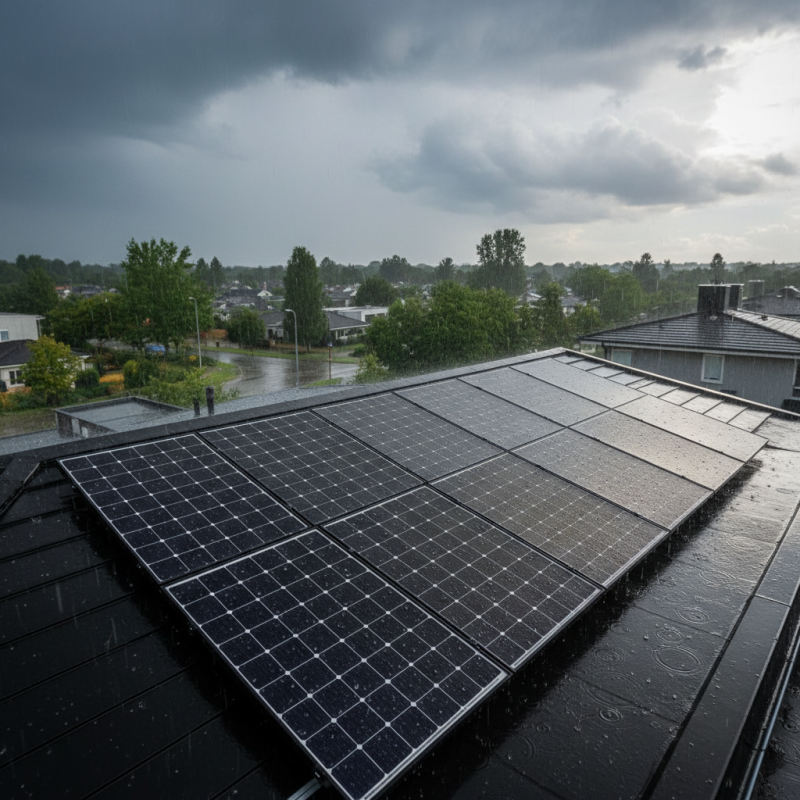
Rain can have a surprising effect on solar panel performance. While most people assume cloudy weather reduces energy output, rain can actually improve efficiency. When rain falls, it cleans the dust and debris off solar panels. This enhances their ability to capture sunlight when the sun reappears. Clean panels are vital for optimal performance.
However, the impact of rain varies. In regions with heavy rainfall, panels may produce less energy during prolonged cloudy days. The reduced sunlight can limit overall output. Additionally, consistent rain can lead to water pooling on the panels. This may result in potential long-term damage if not managed properly.
It's important to note that solar panel systems are designed for various weather conditions. Installers often account for rain and its effects during the design phase. Users should monitor their systems to understand how local weather impacts performance. Keeping an eye on output during rain can provide insights into how to optimize energy generation.
: Rain can clean solar panels, enhancing their efficiency. Clean panels absorb more sunlight when the sun reappears.
Not always. Although rain can reduce direct sunlight, it can improve performance long-term by cleaning debris.
Yes, output can lower by 30% in rainy conditions compared to sunny days due to reduced sunlight.
Regular cleaning of panels helps. Also, adjust the angle to allow rainwater runoff.
Yes, they are designed to perform under various weather conditions, including rain.
Consistent rain may lead to water pooling. This can potentially damage the panels over time.
Yes, monitoring helps you understand the impact of local weather on energy production.
Advanced solar technology optimizes energy capture, even in less-than-perfect weather.
Regular cleaning is recommended, as rain might not remove all residues.
Yes, adopting seasonal strategies can help maximize energy generation throughout varying weather conditions.
The article "How Does Rain Affect Solar Power Efficiency and Output?" explores the various effects of rainy weather on solar power systems. It begins by discussing how rain impacts solar panel performance, highlighting that while clouds may reduce sunlight, rain can also clean the panels, potentially increasing their efficiency. Understanding the mechanism of solar energy conversion is crucial, as it sheds light on how variations in weather conditions affect overall output.
Studies analyzing solar power output during rainy conditions reveal that, although rain can lower immediate energy generation, the increased efficiency from cleaner panels often compensates in the long run. A comparative analysis demonstrates that solar efficiency tends to decline in rain compared to sunshine, but the difference may not be as significant as assumed. Finally, the article presents mitigation strategies for enhancing solar performance in rainy weather, suggesting practical solutions for optimizing energy output. Ultimately, the article addresses the question, "What happens to solar power when it rains?" by concluding that rain has both challenges and potential benefits for solar energy systems.
